Posts

Showing posts with the label SingularityU

SingularityU Sydney Summit - Exponential Energy

Image
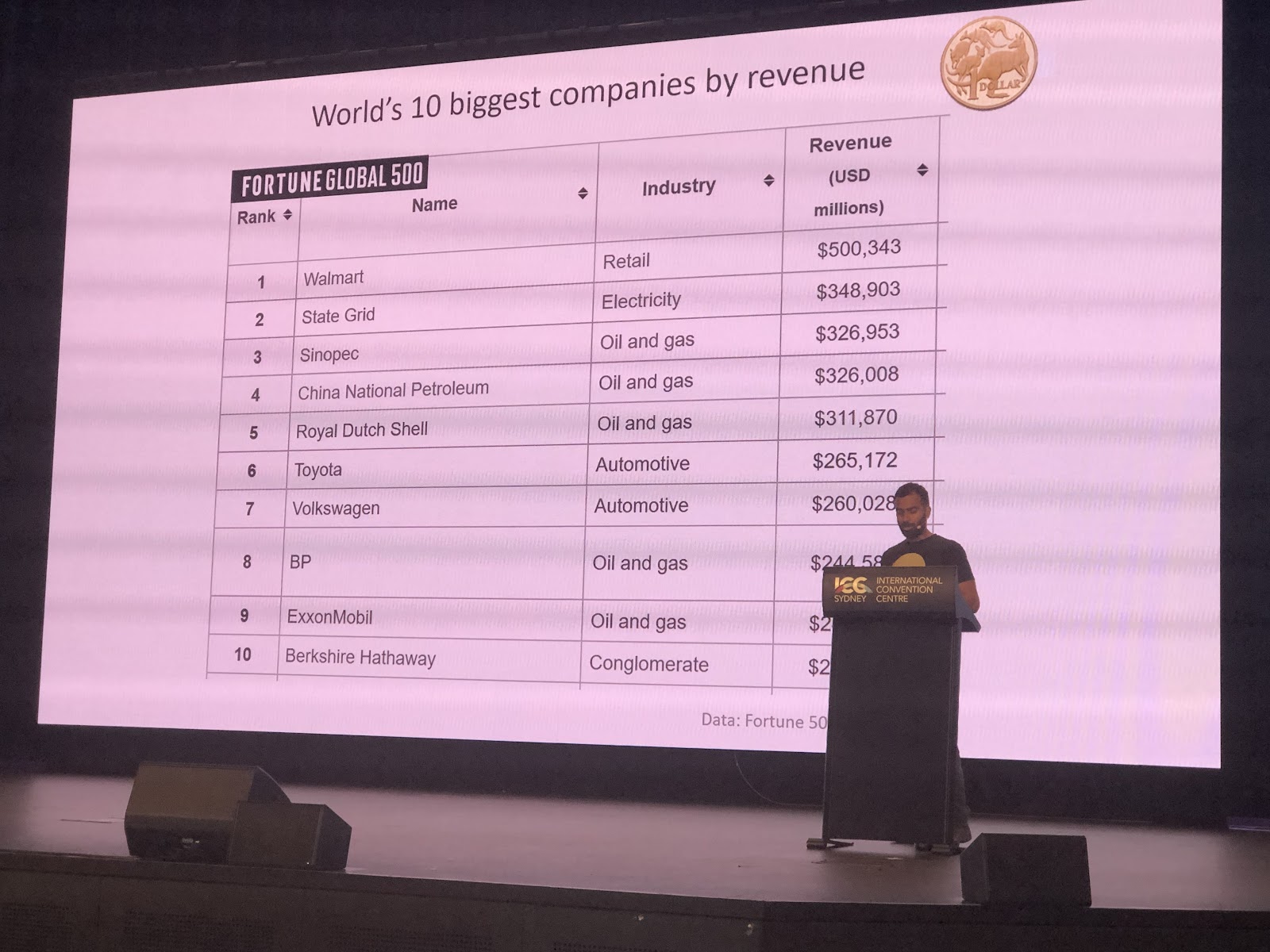
Speaker - Ramez Namm The world is bumping up against multiple environmental and natural resource hurdles: climate change, peak oil, fresh water shortages, and rising prices for food, minerals, and commodities of all sorts. At the same time, a growing population and a surge in the wealth of the developing world is increasing consumption. Can innovation keep pace? What are the true limits to growth? How do we overcome the challenges that face us? This session will provide an overview of the key natural resource and environmental challenges that face us, the on-the-horizon innovations that hold the promise to overcome them, and the policies that would best encourage innovation in those critical fields. The true limits to economic and natural resource growth on Planet Earth will be presented and discussed. Energy is a moral issue. Last five years are the warmest in modern history. Coal industry is being disrupted. Many coal companies are going bankrupt. Due to plunging cost of clean en...

SingularityU Sydney Summit - Future Crunch: How Did We Get Here?

Image
Presented by Future Crunch Kicking off Day 2 with some intelligent optimism, prepare yourself for a musically-inspired story about the human race you don’t hear very often. Diseases are being eradicated, war and famine are decreasing, human rights are improving, and millions of people are creating an economy that doesn’t cost the earth. Our species has made some incredible progress in the year 2019 – we’re just not hearing a lot about it. It’s time to get up to speed. We know the challenges we face. This is how, with boldness, creativity, and revolutionary technologies, we are rising to meet them. About Future Crunch We are a group of scientists, artists, researchers and entrepreneurs that believes that science and technology are creating a future that is more peaceful, connected and abundant. We’re determined to share that story. Our expertise ranges from political economy, biotechnology and data science, to music, art and philosophy. We use our diverse skills and knowledge to pr...

SingularityU Sydney Summit - AI or Die? Redefining Humanity in the Software Age

Image
Speaker - Alix Rübsaam While some predict that the rise of Artificial Intelligence will mean the “end of humankind”, others see no future without algorithms and data-driven systems. What sense can we make from these predictions and warnings? This talk unpacks the ways in which current computational systems have impacted our culture and sense of self, explore software as a metaphor for our humanity, and challenge existing ideas about what it means to be human in the digital age. Superintelligence Paths, Dangers, Strategies by Nick Bostrom Superintelligence: Paths, Dangers, Strategies is a 2014 book by the Swedish philosopher Nick Bostrom from the University of Oxford. It argues that if machine brains surpass human brains in general intelligence, then this new superintelligence could replace humans as the dominant lifeform on Earth. AI Poses an Existential Threat to Humanity The intelligence of machines will exceed that of humans Computers will breach the limits of human cognition...

SingularityU Sydney Summit - Why Decentralized Technology Matters for Freedom

Image
Speaker - Alex Gladstein Notes below from the first half. View video above for full talk. What is the role technology will play in shaping our future society?   Some technology steers governments and corporations in a more authoritarian direction, increasing control over individuals and, over time, crushing creativity and innovation. Other technology — decentralized technology — helps protect freedom, privacy, and curiosity. Democracy itself can be thought of as a decentralized technology that helped liberate humans from tyranny. The internet, of course, decentralized knowledge and put it in the hands of nearly everyone on earth. Encrypted messaging is a technology that allows us to communicate without fear. And now, Bitcoin is breaking the monopoly over money that governments and corporations enjoy. This talk will walk through these narratives and focus on why decentralized money, especially, matters for the future of freedom. The Panopticon The panopticon is a disciplinar...

SingularityU Sydney Summit - Democracy for the 21st Century: A work in progress

Image
Speaker - Pia Mancini The implications and opportunities of many of the technological breakthroughs happening now and in the near future will be nothing short of disruptive to our lives, our businesses and industries, and society as a whole. We are transitioning to a new model of the State and society, but we are still clueless as to what it is or how it should look like. A new understanding and set of tools are required to figure out how we will solve one of the greatest problems facing humanity today: how will we govern ourselves? Our democracies are 500 years old. It made sense back then that the few made decisions for the many because it was impossible for everyone to participate. If we want to have an impact on policy we have to be experts in specific fields or commit our lives to politics. We have no opportunity to participate in design. We are 21st Century citizens living with 19th Century institutions that were conceived with 15th Century information technologies. Apathy is...

SingularityU Sydney Summit - Political Science: Exponential Interactions between Technology and Social Justice

Image
Speaker - Niraj Lal “The future is already here, it’s just not very evenly distributed” wrote William Gibson in 1993. The intersections between science and politics are fraught: there are dissonances between how technology advances and how social policy can distribute it equitably. With an exploration of the four limited resources of the universe: energy, time, space and matter, this talk explores the human interaction with each, highlighting what technology can do for social justice in three examples: The democratisation of energy Sharing distilled knowledge and persistent wisdom in an age of the constantly New Dragnet surveillance and methods to resist it Supporting our #futurebydesign to be just, unrestricted, and evenly distributed. Solar panels will soon be cheaper than plywood Global distribution of wealth World’s wealthiest 10% own 85% of global wealth Top 10% own $100,000 worth of assets. May of us are in the top 10%! Our limited resources include: Energy Time Matter (r...

SingularityU Sydney Summit - Future Proofing Business

Image
Amin Toufani from T Labs Talk above from earlier this year. Exponential technologies lead to exponential winners and losers - theme seems to be the exponential divide! Self-driving cars led to three things: Unemployed drivers Reduced accidents Reduced car ownerships Every development brings about losses AND gains. We are heading for "The Great Bifurcation". We are heading for the great divide. Those who benefit and those who are left behind. The Intractable trinity Sovereign risk Commodity Oversupply GDP Compression Technological Deflation 52% unhappy at work 69% Consider meetings not productive 39% Report sleeping at meetings Happiness at work is proven to be achieved when you have thre things - mastery, autonomy, purpose. Businesses are starting to realise the importance if hiring trilinguals. These are people with three strengths. Decision Science - they understand the science of decion making. Coding and AI - they don't need to be a...

SingularityU Sydney Summit - Exponential Leadership for a Positive Future

Image
YouTube ignored warning they were letting toxic videos run rampant. Where are the ethics? Kaila talked about the Brene Brown approach. Brown talks about lack of courage Tough conversations – we opt out of the hard conversations because we deem it ‘not in our nature to be mean to people’. But by opting out of the hard conversations we encourage ‘side conversations’, or gossiping that breeds politics and game-playing. Fears and feelings – as leaders we have convinced ourselves that dealing with fears and feelings is ‘not’ the role of leaders. But Brown says we are kidding ourselves because ‘human beings have fears that need to be addressed’ and if we don’t address fears and feelings we will never get to the root of bad behaviour in individuals. Stuck in setbacks – people can’t reset after failure or setback. Rather than address the issue at the heart of the setback we spend more time dealing with the setback but Brown says we need to address the issue to help the perso...

SingularityU Sydney Summit - Introduction to Exponentials

Image
Lisa Andrews Co-CEO SingularityU Australia UN Sustainable Development Goals were talked about. Could help but think how could we use these to connect up and power up PBL across New Zealand? Global Grand Challenges are the 12 Global Challenges as defined by SinularityU. Human Development has been local and linear. Human Development is now global and exponential. You can't past the Intro to Exponentials that Kaila Colbin delivered at SingularityU Christchurch. The earths population is now 7.7 billion people due to second Agricultural Revolution. Where will this end? Moore’s Law and idea of exponential technology. There’s nothing to suggest the exponential rate of development in technology will stop. The iPhone 120 million times more powerful than the computer NASA used to land us on the moon. We need to think about impact. Impact - if you want to be a billionaire, solve a problem for a billion people. The internet of things will become the internet ...

Introducing City Senior School at The Launching Pad

Image
In November last year I was lucky enough to attend the SingularityU Summit in Christchurch. It was an awesome three days. It reignited my love of futures thinking and served as a swift kick in the pants. I wrote this blogpost.  I went back to school. I felt unsettled. I needed someone to help me process my thinking. So a week or so later I called up my friend and now business partner and co-founder Brett O'Riley . I knew Brett had attended the SingularityU Executive Training in the US and I also knew he shared my frustration at the seemingly glacial pace of change in education. I shared my thinking and a vision for a school that was part school and part innovation co-working space. I wanted to know why we weren't leveraging digital technology to support more self-directed study in a social learning environment. I wanted to know why schools weren't more like GridAKL ? Why are young people still in uniforms "PAC-MANing" their way through disconnected...

Communities of Status Quo: Is there enough disruption in your Community of Learning??

Image
Over the last year or so I have thoroughly enjoyed being part of the establishment of what looks to be a particularly fabulous West Auckland COL - Te Whiria te Tangata. It is great to see school communities of schools coming together to collaborate to improve student outcomes. It is great to see school communities of schools collaborating, full stop. However I do have a concern. I am not concerned that communities of learning won't see schools coming together to improve learner outcomes, what I am concerned about is that they may not, because of their very structure and achievement challenges, actually change much else. When scanning the endorsed achievement challenges and in the conversations I have had with many colleagues from a range of communities, I keep thinking, is there much within COL plans and achievement challenges that move beyond the paradigm of business as usual? Or are we simply going to see communities of schools holding hands, singing kumbaya and patting t...

#SUNZSummit - Why I am looking forward to SingularityU

Claire Amos: Realising the Future of New Zealand Education   from Festival of Education on Vimeo . On the eve of the inaugural SingularityU NZ Summit I am continuing to build some very genuine levels excitement about what I might learn and how it might reframe my thinking about the future of education. It has been awesome to be part of what feels like a groundswell of educators who share a passion for futures thinking and educational change and it has been equally exciting to see this become a theme of large scale conferences such as Ulearn and EduTech and the many smaller corporate organised edu-conferences that have popped up in recent years. However alongside this excitement this excitement there has also been a sense of frustration. Whilst there is absolutely a growing demand for educational change, there is also sense that these "edu-changemakers" still, in a sense live within a bit of a bubble. Head to any conference and you see the same lovely group of educa...